
A Surprise Winter Guest
June, 2026
by Mary Dueren
It’s not often I get stopped in my tracks. It does happen. This time it was early January. January 7th , 2026 to be exact.
The spouse and I were in post-holiday slowdown mode the morning of January 7th . The cats were starting their morning siesta and I was heading for my second cup of coffee. As usual when passing by our large patio door, I assess the bird activity. First, checking the feeders and then the heated bird bath. The bird bath made me stop and look twice. There, in full technicolor was a male Baltimore Oriole!!
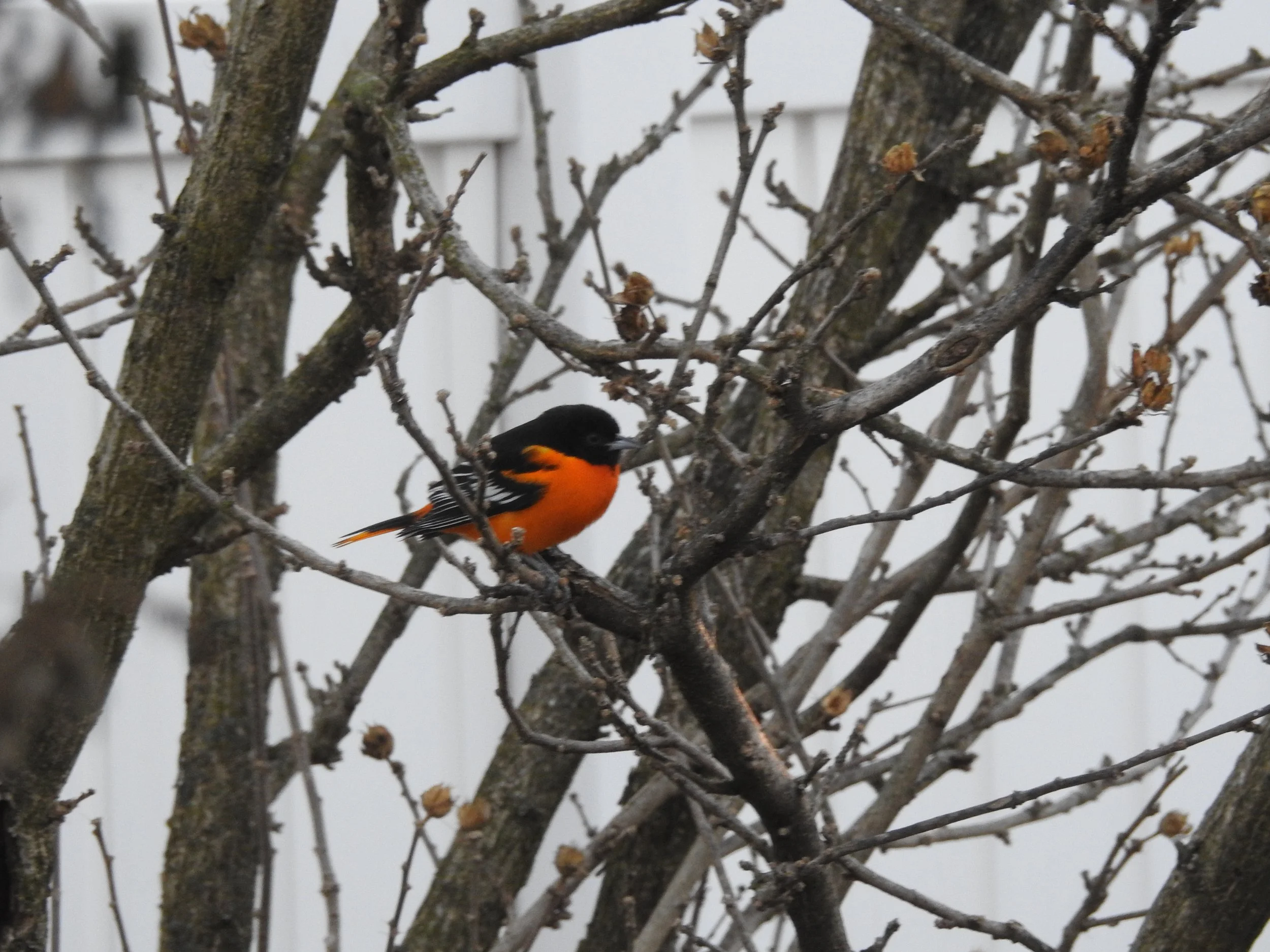
Baltimore Oriole, photographed by Mary Dueren
This January, I’m saying to myself. Baltimore Orioles do not show up at my feeders until late April or early May. My husband is asking what’s wrong and I’m yelling that nothing is wrong. I just need my camera to document the out of season bird in our backyard.
I took a number of pictures and created an eBird entry. The bird came back the next day. It was gone on January 9th, but returned on the tenth. By this time, eBird verifier Diane Bricmont confirmed the sighting for the state records. We discussed a possible theory for the oriole’s appearance.
In late November, a friend and former co-worker of mine sent me pictures of a male Baltimore oriole at her feeders. The oriole stayed around her home, feeding on oranges and see, until December 10 th . Then it disappeared. We all thought that the bird had realized that it was time to move on. Then an oriole appeared at my feeders. Our theory is that this was the same bird. The Oriole must have found food in many backyard feeders and local woodsy areas.
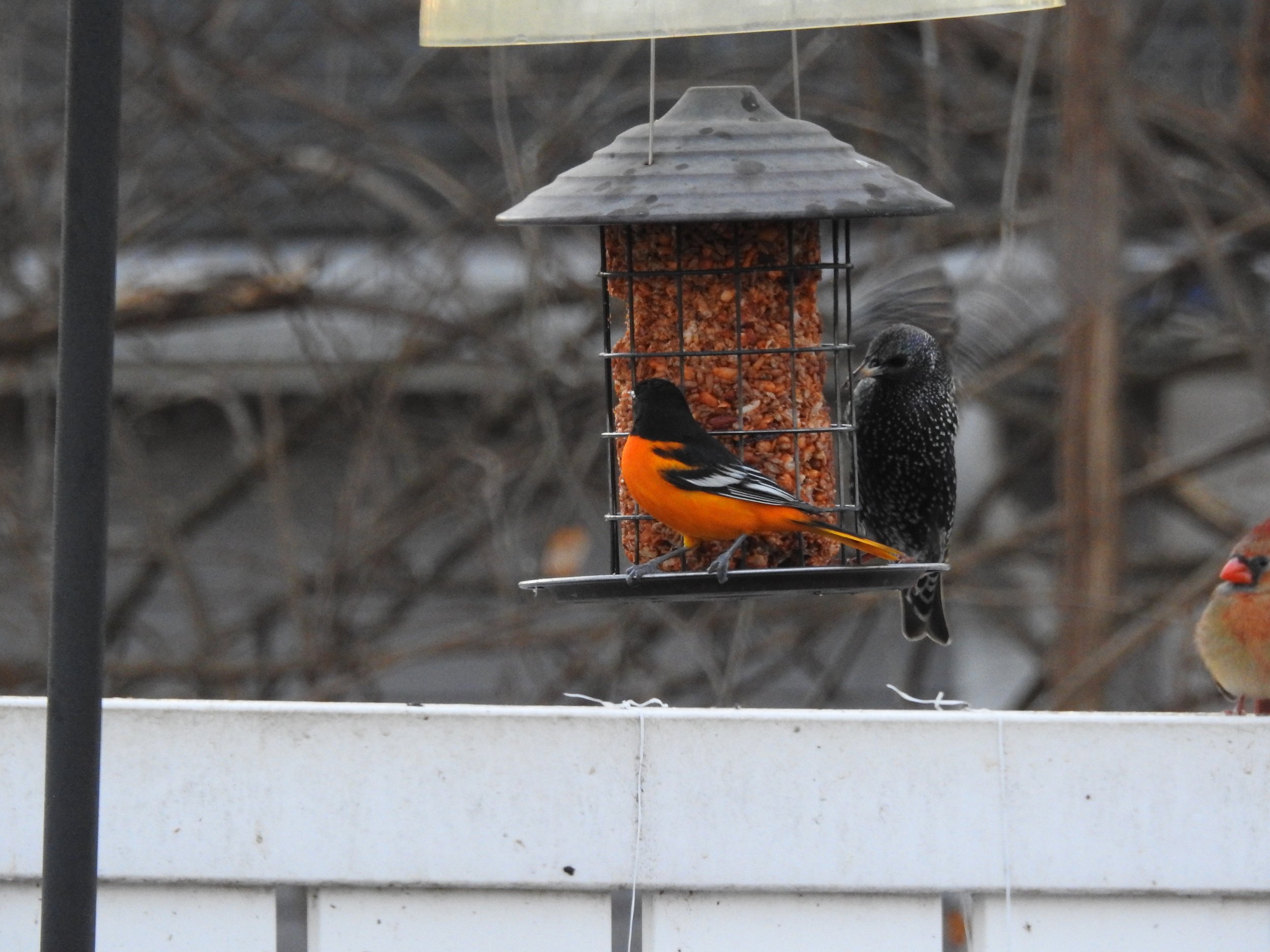
Baltimore Oriole, photographed by Mary Dueren
After January 10th , there were no other reports of a Baltimore Oriole in the area. I may have heard the bird in Creve Coeur Park while doing the National Audubon Society’s Climate Watch Survey. It was one long flute-like calls on the west side of the big lake near the soccer fields. I hope he survived the hard winter of 2026 or at least got the urge to head south.
Here’s the link to my eBird list that has pictures: