
October, 2026
by Mary Dueren and Karen Meyer
2026 Eastern Bluebirds, Purple Martins and Black Snakes
Every year brings new surprises. This summer brought out a lot of Black Snakes, resulting in more predation in the nest boxes. This activity gets hard when temperatures get hot. The rewards of seeing a nest box of Bluebird successfully fledge brings me back year after year.
This year, the breeding activity in the 12 nest boxes on the Little Creve Coeur Ecological Trail concluded near the very hot end of August. Several volunteers from a rotating group of 10 regulars graciously helped monitor the bird boxes twice a week. The season brought some Eastern Bluebird successes, but more Northern House Wren successes as was true the lastseveral years. There were 9 Eastern Bluebird attempts in four different boxes, with a total of only 10 fledged bluebirds. We did, however, see many Eastern Bluebirds along the trail, especially in the open stretch before the wooded areas. Presumably there are natural cavities available as well. House Wrens had 33 attempts in a total of nine boxes, with 27 fledged wrens.
Both bird species had losses; some we’re pretty sure were due to black rat snakes. We observed snakes on the trail multiple times. When eggs disappear with no trace, snake predation is a pretty good guess. All boxes have predator guards, but sometimes snakes find a way to get around them. There was one incident of broken bluebird eggs, likely due to the wrens. Often a bluebird nest would be taken over by wrens placing their stick materials on top of the dried grass material. We cheered one day when we saw bluebirds take over a wren nest, placing grass on top of the stick nest! All data was reported in Cornell's NestWatch app.
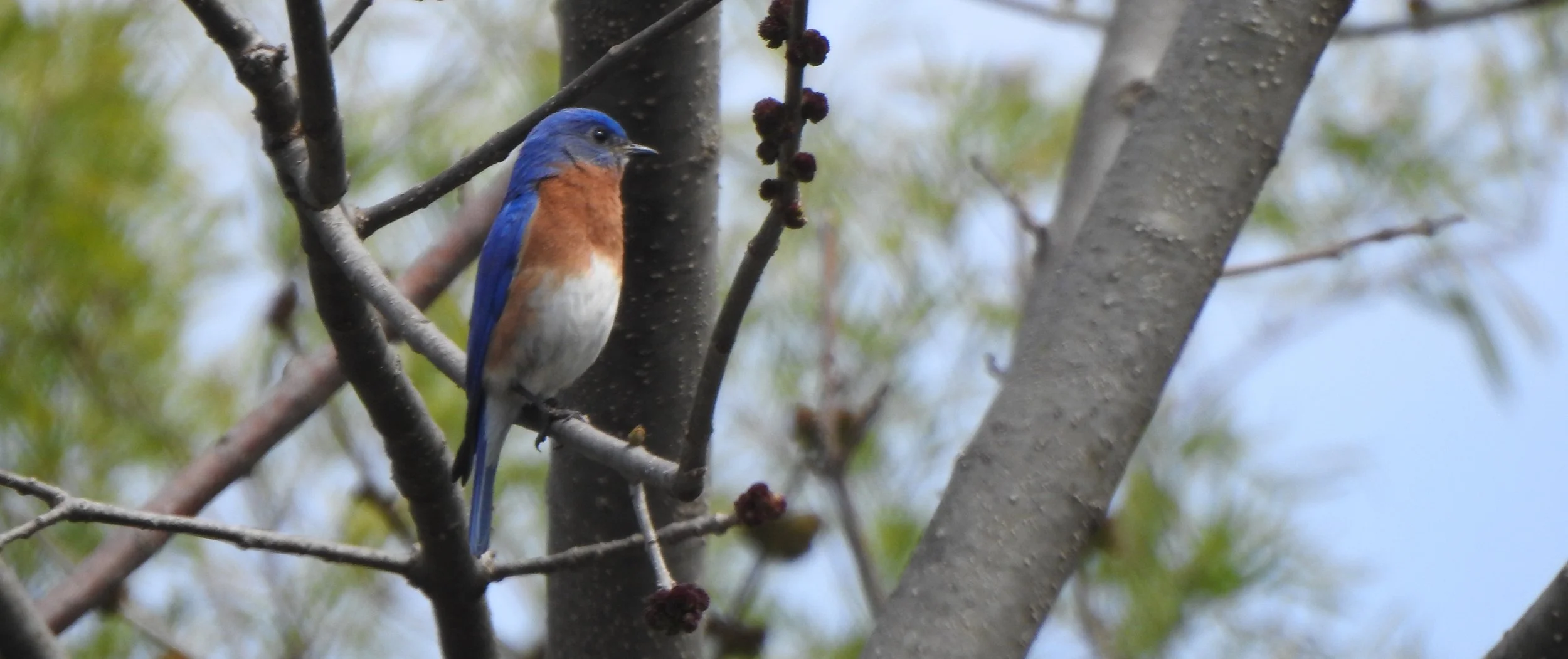
One of my best Eastern Bluebird pictures from LCCEA 2021, by Mary Dueren
The purple martins at the Mallard Lake site had a pretty good year despite the heat and some black snake predation attempts there as well. There were an estimated 98 martins that fledged. By mid- to late July, all the martins had begun their journey to Brazil and beyond. As always, they were a joy to observe; then comes the void when their activity and calls disappear from the site, until their return in early spring. Now it’s time to enjoy the birds of fall and winter. The season continues!
Thank you to all the volunteers who helped monitor nest boxes; they include Karen and Glenn Meyer, Mary Dueren, Stephanie Schuppan, Cathy Wilhelmi, Ken Smith, Ellen Harmon, Laura Madden, Mary Klauke, and Carl Davis.